
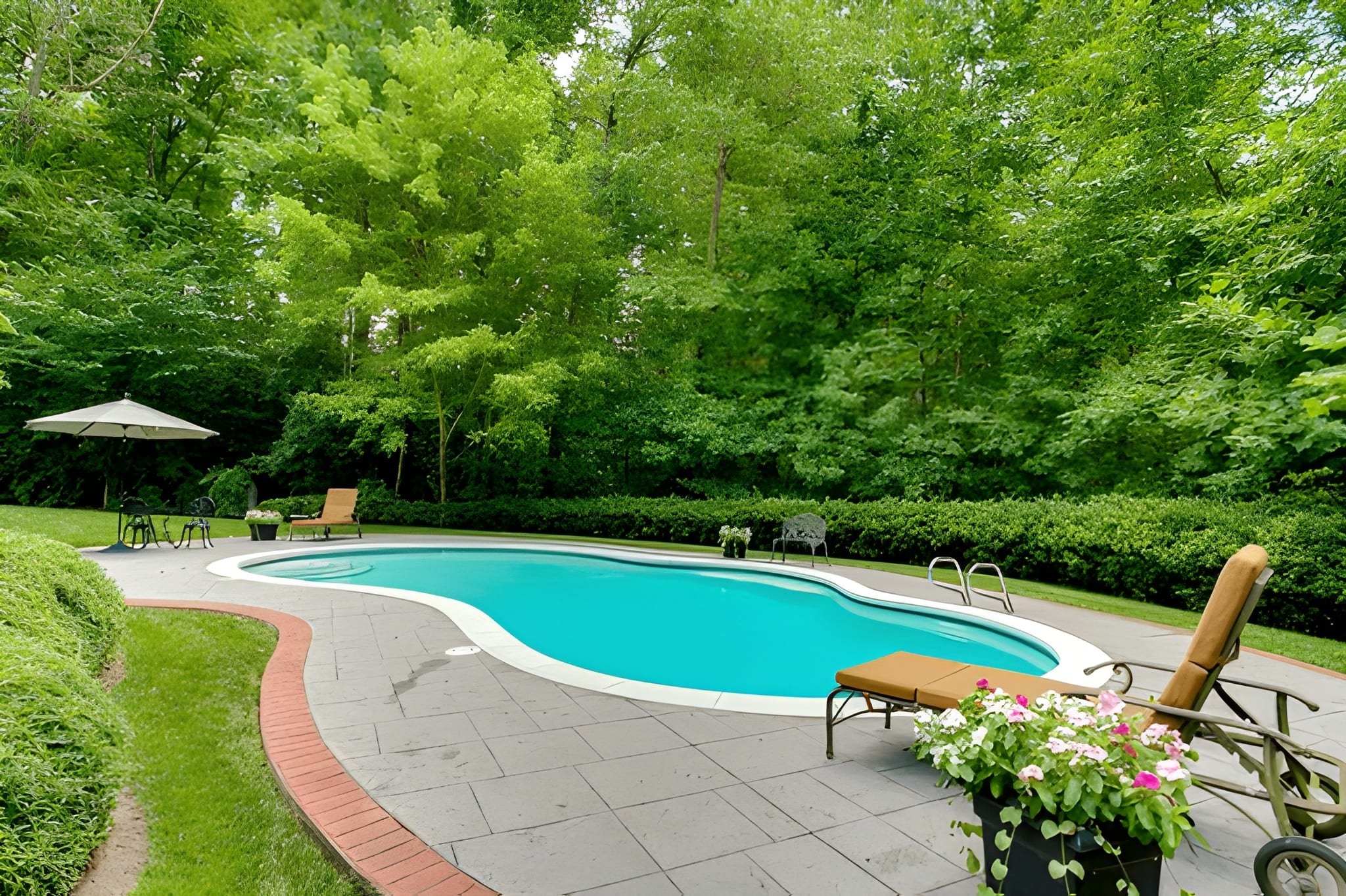
You’re ready to build a pool. You’ve saved the money. You’ve measured the yard. You’ve got family support. But now comes the biggest question: What is the best type of pool for your backyard — fiberglass, vinyl, or concrete?
Here’s a fact that might surprise you: 58% of American pool owners wish they had chosen a different pool type after installation. They didn’t know what they were signing up for. They focused on price alone. They ignored maintenance requirements and long-term costs.
This decision affects your life for decades. The wrong choice means constant repairs, high chemical costs, and endless frustration. The right choice gives you years of easy enjoyment and minimal headaches. Let’s break down each option so you can make the smart decision for your specific situation.
Why Your Pool Type Choice Matters
Your pool type determines everything about pool ownership. Installation time varies from days to months. Maintenance requirements range from minimal to demanding. Lifetime costs span from affordable to expensive. Surface feel changes from smooth to rough.
Three main options exist in the American market. Each has true advantages and real drawbacks. No single type works best for everyone. Your climate matters. Your budget matters. Your patience level matters.
What is the best type of pool for your backyard — fiberglass, vinyl, or concrete? The answer depends on what you prioritize. Speed? Choose fiberglass. Initial savings? Go vinyl. Complete customization? Pick concrete.
Understanding these differences upfront prevents buyer’s remorse. You’ll know exactly what you’re getting. You’ll plan for the right maintenance schedule. You’ll budget appropriately for long-term ownership.
Let’s examine each type in detail. We’ll cover installation, maintenance, costs, durability, and best-use scenarios. By the end, you’ll know which pool fits your lifestyle.
Fiberglass Pools: Fast Installation and Low Maintenance
Fiberglass pools arrive at your house in one piece. A factory molds them to exact specifications. A crane lifts the shell into your prepared excavation. The installation crew connects plumbing and backfills around the edges. You’re swimming within a week.
Installation speed is the biggest selling point. Traditional pools take 6-12 weeks to complete. Fiberglass pools go in during 3-7 days. Weather delays are minimal. You’re not waiting for concrete to cure or liners to stretch.
The smooth gel-coat surface feels great on your feet. It resists algae growth naturally. You’ll use 50-75% fewer chemicals than concrete pools. Weekly maintenance takes just 30-45 minutes. That’s less time than mowing your lawn.
Durability is outstanding. Quality fiberglass pools last 30-40 years with minimal issues. The flexible material handles ground movement better than rigid concrete. Freeze-thaw cycles don’t crack the shell. Tree roots can’t puncture it.
Limitations exist with fiberglass. You’re stuck with pre-designed shapes and sizes. Most manufacturers cap out at 16 feet wide and 40 feet long. No custom depths or unique features. What you see in the catalog is what you get.
Upfront costs run $40,000-$85,000 for typical installations. That’s more than vinyl but less than custom concrete. The higher initial investment pays off through lower operating costs. Over 15 years, fiberglass often costs less total than the alternatives.
Best for homeowners who want:
- Quick installation timelines
- Minimal maintenance commitment
- Smooth, comfortable surfaces
- Long-term cost savings
- Standard sizes and shapes work fine
Vinyl Liner Pools: Budget-Friendly Flexibility
Vinyl liner pools use a custom-printed liner inside a structural frame. The frame can be steel, aluminum, or polymer. The liner stretches to fit perfectly. It creates a smooth, waterproof barrier between you and the ground.
Affordability makes vinyl the most popular choice. Basic installations start around $25,000-$35,000. That’s $15,000-$30,000 less than other options. More families can afford to get in the water sooner.
Customization exceeds fiberglass. You’re not limited to pre-made shells. Any shape is possible within reasonable dimensions. Want a lazy L-shape? Done. Prefer a Grecian style? No problem. Rectangle with custom dimensions? Easy.
The liner feels soft underfoot. No rough edges. No scraping your knees on plaster. Kids and adults appreciate the gentle surface. Vinyl also costs less to repair than gel-coat or plaster when damage occurs.
Liner replacement is the big ongoing cost. Liners last 7-10 years on average. Replacement runs $4,000-$5,000 per cycle. Over 30 years, you’ll replace it 3-4 times. Budget $12,000-$20,000 in liner costs over your pool’s lifetime.
Seam vulnerability creates the main weakness. The liner attaches to the frame at the top edge. That seam can leak if it separates. Sharp objects puncture vinyl easily. You’ll need patches for tears and holes.
Appearance limitations matter to some buyers. The liner bottom has a printed pattern. It never looks quite as elegant as plaster or fiberglass. The pattern fades over time from sun and chemical exposure.
Best for homeowners who want:
- The lowest upfront investment
- Custom shapes and sizes
- Soft, comfortable surfaces
- Don’t mind liner replacement every decade
- Budget-conscious pool ownership
Concrete Pools: Custom Design Freedom
Concrete pools offer unlimited possibilities. Your imagination sets the only limits. Beach entries. Infinity edges. Tanning ledges. Grottos. Waterfalls. Integrated spas. Unique shapes. Custom depths. Everything is achievable with concrete.
Gunite or shotcrete construction starts with rebar framework. Concrete is sprayed onto the steel structure. It cures for several days. Then crews apply plaster, pebble, or tile finish. The process takes 8-12 weeks from excavation to swim time.
Design flexibility is absolute. Build any shape at any size. Go as deep as local codes allow. Add swim-up bars, built-in seating, or zero-entry beaches. Integrate lighting anywhere. Match your pool to your property’s unique characteristics.
Durability is legendary. Concrete pools last 50+ years with proper maintenance. The structure itself is nearly indestructible. Hurricanes and earthquakes might damage equipment but rarely crack quality concrete pools.
Surface maintenance requires commitment. Plaster surfaces need brushing 2-3 times weekly. They absorb more chemicals than smooth surfaces. You’ll spend more on sanitization. Every 10-15 years, you’ll resurface the pool. That costs $5,000-$15,000 depending on finish choice.
Algae growth happens faster on porous concrete. Weekly chemical balancing is non-negotiable. Miss a week and you’ll fight green water. The rough texture holds algae spores. Scrubbing becomes part of your routine.
Installation costs start at $50,000 and easily exceed $100,000. Complex designs with multiple features can reach $200,000+. You’re paying for skilled labor, custom engineering, and extensive materials.
| Feature | Fiberglass | Vinyl | Concrete |
|---|---|---|---|
| Install Time | 3-7 days | 4-8 weeks | 8-12 weeks |
| Initial Cost | $40K-$85K | $25K-$45K | $50K-$100K+ |
| Surface | Smooth gel-coat | Soft vinyl | Textured plaster |
| Lifespan | 30-40 years | Frame: 30+ years, Liner: 7-10 years | 50+ years |
| Maintenance | Low | Medium | High |
| Chemical Use | Low | Medium | High |
| Customization | Limited | Moderate | Unlimited |
Best for homeowners who want:
- Completely custom designs
- Unique features and shapes
- Maximum pool size options
- Don’t mind higher maintenance
- Have larger budgets and timelines
You may also read: 6 Amazing Creative Pool Lighting Ideas to Transform Your Pool After Dark
Making Your Final Decision
What is the best type of pool for your backyard — fiberglass, vinyl, or concrete? Now you can answer that question for yourself. Each type serves different priorities and lifestyles.
Choose fiberglass if you value your free time. You want to swim more and maintain less. You’re fine with standard shapes. You think long-term about total ownership costs. Quick installation appeals to you.
Choose vinyl if upfront budget is your primary concern. You want some design flexibility. You’re comfortable with liner replacement every decade. Soft surfaces matter to you. You can handle moderate maintenance.
Choose concrete if you have a specific vision that demands it. Budget is flexible. You’re willing to invest time in weekly maintenance. Your property requires custom solutions. You want features impossible with other materials.
Your climate plays a role too. The Association of Pool & Spa Professionals notes that fiberglass performs exceptionally well in areas with freeze-thaw cycles. Vinyl works everywhere but shows wear faster in intense sun. Concrete thrives in all climates but needs more care in extreme cold.
Consider your timeline. Need the pool for summer? Fiberglass is your only realistic option if it’s already spring. Planning a year ahead? All three types work. Patience opens up more possibilities.
Talk to your neighbors who own pools. Ask about their maintenance routines. Find out what they wish they’d known. Real-world experience beats marketing materials every time. The Better Business Bureau can help you find reputable local contractors for any pool type you choose.
Test pools if possible. Visit showrooms. Feel the surfaces. Ask detailed questions about maintenance requirements. Good contractors will give you honest assessments of what pool ownership really involves.
Final Thoughts: Your Perfect Pool Awaits
You’ve got the facts about all three pool types. You understand the trade-offs. You know the real costs and maintenance requirements. The confusion that stopped you before? Gone.
What is the best type of pool for your backyard — fiberglass, vinyl, or concrete? Only you can answer that now. Your priorities, budget, and lifestyle point you in the right direction.
Stop dreaming and start planning. Contact Cutler Pools today for a free consultation. We’ll assess your property, discuss your vision, and recommend the pool type that matches your needs. We install all three types, so our advice is unbiased. We want you swimming in the right pool, not just any pool. Let’s build your backyard paradise together.
0 Comments