
Winter damage costs pool owners thousands of dollars every year when they skip proper closing procedures. Frozen pipes burst, equipment cracks, and pool surfaces suffer permanent damage that could have been prevented.
Your pool needs protection from freezing temperatures, ice formation, and chemical imbalances during the off-season. Proper winterization saves money on spring repairs and extends your pool’s lifespan significantly.
This complete guide walks you through every step to close your pool for winter correctly. You’ll protect your investment and ensure a trouble-free opening next swimming season.
Timing Your Pool Closing for Maximum Protection
Getting the timing right when you close your pool for winter makes the difference between successful winterization and costly spring repairs. Most pool owners should begin closing procedures when daytime temperatures consistently stay below 65°F for several days. This temperature range prevents algae growth while giving you comfortable working conditions.
Waiting too long creates serious problems that affect your pool’s condition. Water temperatures above 65°F allow algae and bacteria to multiply rapidly, making spring opening more difficult and expensive. These organisms consume winterizing chemicals quickly, leaving your pool unprotected during cold months.
Closing too early wastes money and reduces chemical effectiveness. Warm water temperatures break down winterizing chemicals faster than cold water, requiring additional treatments that increase your seasonal costs. Early closing might mean missing weeks of potential swimming time during unexpectedly warm fall weather.
Your local climate patterns should guide closing decisions more than calendar dates. Southern regions with mild winters might not need full winterization procedures until late November or December. Northern areas with harsh winters should complete closing procedures by mid-October to prevent freeze damage.
Weather forecasting helps you choose optimal closing windows. Plan your winterization during periods of stable, cool weather without predicted storms or temperature spikes. Rain can dilute closing chemicals and make cover installation difficult, while sudden warm spells can restart algae growth.
Pool usage patterns affect timing decisions for many families. Some owners prefer early closing to avoid maintenance during busy holiday seasons. Others extend swimming seasons as long as the weather permits, accepting the risk of rushed closing procedures if temperatures drop suddenly.
Professional closing services get booked quickly during peak season, typically from September through November in most areas. Schedule your closing appointment early if you prefer professional help, or plan DIY closing procedures well in advance to avoid last-minute scrambling.
Equipment availability becomes an issue during peak closing season. Pool supply stores run low on winterizing chemicals, covers, and closing accessories when everyone closes pools simultaneously. Purchase closing supplies in late summer to avoid shortages and higher prices.
Water Chemistry Balancing Before Winter Storage
Proper water chemistry creates the foundation for successful winter pool storage and prevents expensive damage during cold months. Start balancing your water chemistry one week before beginning other closing procedures. This timing allows chemicals to circulate fully and reach stable levels throughout your pool.
Your pH levels need adjustment to the 7.2-7.6 range for optimal winter protection. Higher pH levels reduce sanitizer effectiveness and can cause scaling on pool surfaces during storage. Lower pH levels become acidic and can damage pool equipment, plumbing, and surface materials over several months.
Total alkalinity should be measured between 80 and 120 ppm to buffer pH changes during winter storage. Low alkalinity allows pH to swing dramatically, potentially causing surface etching or equipment corrosion. High alkalinity makes pH difficult to adjust and can lead to cloudy water that attracts algae growth.
Chlorine levels require careful balancing before you close your pool for winter. Maintain 1-3 ppm free chlorine during the week before closing, then shock the pool with extra chlorine 24-48 hours before final closing procedures. This shock treatment kills existing bacteria and provides residual protection.
Calcium hardness measurements should fall between 150 and 300 ppm in most pool types. Low calcium levels can cause plaster etching and equipment corrosion during long storage periods. Excessive calcium creates scaling problems and makes spring opening more difficult by requiring acid washing or surface repairs.
Winter Chemical Balance Targets:
| Chemical Parameter | Target Range | Why Important |
| pH | 7.2-7.6 | Prevents corrosion and scaling |
| Total Alkalinity | 80-120 ppm | Buffers pH fluctuations |
| Chlorine | 1-3 ppm | Prevents algae and bacteria |
| Calcium Hardness | 150-300 ppm | Protects surfaces and equipment |
Winterizing chemicals require addition after achieving a proper basic chemistry balance. Algaecide prevents algae growth during storage by creating hostile conditions for spore development. Use high-quality algaecides designed for winter use rather than regular maintenance products that break down quickly in cold water.
Metal sequestrants prevent staining and equipment damage from iron, copper, and other metals that concentrate during winter storage. These chemicals bind metal particles and prevent them from depositing on pool surfaces or corroding equipment components.
Enzyme products break down organic contaminants that accumulate during winter storage. Dead leaves, pollen, and other organic matter can create nutrient sources for algae and bacteria if not properly treated. Enzymes digest these materials and prevent spring water quality problems.
Pool shocking becomes more critical before winter closing than during regular maintenance. Use calcium hypochlorite shock products that won’t add unwanted chemicals to your winter storage water. The shock treatment should raise chlorine levels to 10+ ppm temporarily before they naturally decline to storage levels.
Equipment Removal and Winterization Process
Pool equipment requires careful winterization to prevent freeze damage that costs thousands in replacement expenses. Begin equipment winterization by turning off all electrical power to pool systems at the main breaker panel. This safety step prevents accidental equipment startup during winterization procedures.
Your pool pump needs complete water removal to prevent cracking from ice expansion. Drain all water from the pump housing by removing drain plugs and opening the pump lid. Store these small parts in a labeled bag attached to the pump to prevent loss during the winter months.
Filter systems require different winterization approaches depending on their type. Sand and DE filters need backwashing followed by complete water removal from tanks and connecting plumbing. Cartridge filters should be removed, cleaned thoroughly, and stored in a dry location away from freezing temperatures.
Pool heaters contain multiple water-filled components that crack easily when frozen. Gas heaters need water draining from heat exchangers, headers, and all connecting pipes. Electric heaters require similar water removal plus disconnection of electrical components that could suffer moisture damage.
Automatic pool cleaners need complete disassembly and winter storage preparation. Remove all water from cleaner bodies, hoses, and connecting fittings. Store cleaners indoors in heated spaces to prevent rubber and plastic components from becoming brittle in cold temperatures.
Equipment Winterization Checklist:
- Drain all water from the pump housing and impeller
- Remove and clean filter cartridges or media
- Drain heater, heat exchanger, and connecting lines
- Remove the automatic cleaner and store it indoors
- Disconnect and store removable equipment
- Apply lubricant to pump seals and gaskets
Chemical feed systems require special attention during winter closing procedures. Chlorinators need complete emptying and cleaning to prevent chemical residue from corroding internal components. Salt systems should have cells removed, cleaned, and stored according to the manufacturer’s specifications.
Pool lights and electrical components need moisture protection during winter storage. Remove underwater lights if possible and store them above water level. Seal all electrical connections with waterproof covers to prevent corrosion from moisture infiltration.
Plumbing lines require antifreeze protection or complete water removal to prevent freeze damage. Use pool-safe antifreeze in lines that can’t be completely drained. Blow out plumbing lines with compressed air to remove standing water that could freeze and crack pipes.
Return lines and skimmer connections need plugging after water removal to prevent ice damage. Gizmos or expansion plugs protect skimmer throats from cracking when ice forms. Return line plugs prevent water from entering plumbing during winter precipitation.
You May Also Read: 7 Ultimate Pool Design Ideas That Transform Your Backyard
Pool Cleaning and Surface Preparation
Thorough pool cleaning before winter closing prevents staining, algae growth, and surface damage during storage months. Start cleaning procedures several days before the final closing to allow disturbed debris time to settle and be removed properly.
Debris removal begins with skimming all floating material from the pool surface. Leaves, twigs, and organic matter continue decomposing during winter storage, creating nutrient sources for algae growth. Remove visible debris manually rather than relying solely on automatic cleaning systems.
Wall brushing becomes more important before winter closing than during regular maintenance. Algae spores and bacteria attach to pool walls and can survive winter chemical treatments if not physically removed. Brush all walls, steps, and corners thoroughly with appropriate brushes for your pool surface type.
Your pool floor requires complete vacuuming to remove waste rather than through the filter system. This method removes fine debris and sediment without clogging filters that need to operate during the early winter months. Vacuum slowly and systematically to capture all settled material.
Waterline cleaning prevents permanent staining during winter storage when water chemistry changes and contaminants concentrate. Use appropriate cleaners for your pool surface and scrub thoroughly around the entire waterline. Organic stains become permanent if not removed before closing.
Skimmer baskets and pump strainer baskets need cleaning and debris removal before equipment winterization. These components collect organic matter that decomposes and creates water quality problems during storage. Clean baskets thoroughly and check for cracks that could cause problems next season.
Pool surface inspection identifies potential problems before they worsen during winter storage. Look for cracks, stains, or loose tiles that need repair before closing. Small problems become major expenses if ignored during the winter months, when freeze-thaw cycles can worsen damage.
Calcium buildup removal becomes important in hard water areas where mineral deposits accumulate during the swimming season. Use appropriate descaling products to remove calcium deposits from surfaces and equipment before winterization. These deposits worsen during winter storage if not addressed.
Automatic cleaner maintenance includes cleaning, inspection, and proper storage preparation. Clean all debris from cleaner components and check for worn parts that need replacement. Store cleaners in heated areas to prevent damage from temperature extremes.
Proper Water Level Adjustment and Drainage
Water level adjustment protects your pool structure and equipment from freeze damage during the winter months. The correct water level depends on your pool type, climate, and closing method, but most pools need water levels lowered below the skimmer opening.
Standard skimmer pools require water levels 4-6 inches below the skimmer opening to prevent ice damage. This level allows for ice expansion without cracking the skimmer throat or damaging the skimmer housing. Water levels are too high, resulting in an expensive skimmer replacement in the spring.
Pools with automatic covers need different water level adjustments based on the cover manufacturer’s specifications. Most automatic covers require specific water levels to function properly and support winter loads. Check your cover manual for exact requirements before adjusting water levels.
Vinyl liner pools need careful water level management to prevent liner damage. Draining too much water can cause liners to float or wrinkle when groundwater pressure increases. Most vinyl pools should maintain water levels just below the return fittings to prevent ice damage.
Fiberglass pools in areas with high water tables should maintain higher water levels to prevent the shell from floating. The surrounding groundwater can lift empty fiberglass shells, causing structural damage and expensive repairs. Consult local professionals about appropriate levels for your area.
Water Level Guidelines by Pool Type:
| Pool Type | Recommended Level | Reason |
| Concrete w/ Skimmer | 4-6″ below skimmer | Prevents ice damage |
| Vinyl Liner | Just below returns | Prevents liner floating |
| Fiberglass | Varies by location | Prevents shell lifting |
| Automatic Cover | Per manufacturer | Supports cover weight |
Drainage methods affect how quickly and efficiently you can adjust water levels. Submersible pumps work faster than siphons but cost more to purchase or rent. Siphon hoses work slowly but cost little and work reliably once started properly.
Water disposal considerations become important when draining large volumes from your pool. Check local regulations about where you can discharge pool water. Some areas prohibit chlorinated water discharge to storm drains or natural waterways.
Equipment considerations affect drainage timing and methods when you close your pool for winter. Drain water before removing equipment to prevent damage during handling. Some equipment needs water support during removal to prevent cracking or bending.
Final water level checking ensures proper protection after drainage completion. Measure water levels at multiple points around the pool to account for uneven surfaces or settling. Mark the final levels for reference during the winter months if additional adjustments become necessary.
Installing Winter Covers and Security Measures
Pool covers provide the most important protection for your pool during winter storage months. Quality covers prevent debris accumulation, reduce chemical consumption, and maintain water quality throughout the off-season. Choose covers rated for your climate’s snow and wind loads.
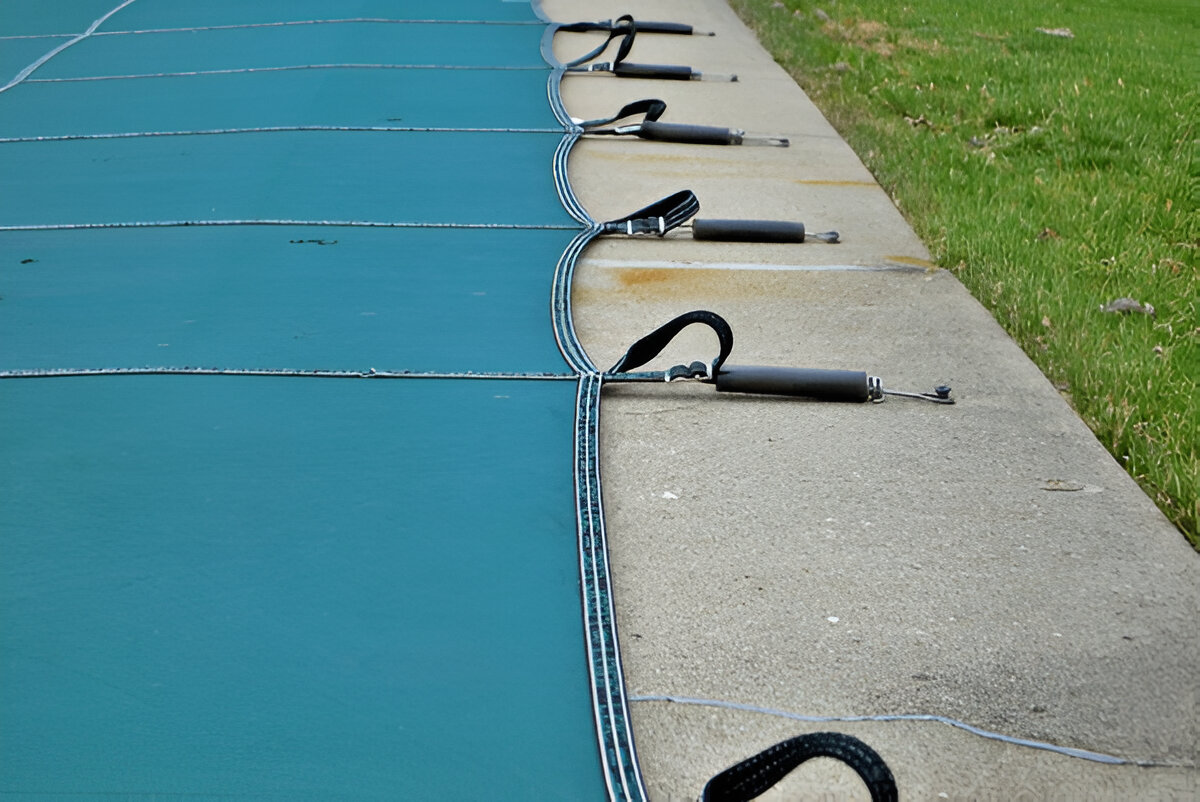
Safety covers offer superior protection compared to standard winter covers. These covers support human weight and prevent accidental entry while providing excellent debris protection. Safety covers cost more initially but last longer and provide better protection than basic covers.
Installation procedures vary significantly between cover types and require careful attention to manufacturer instructions. Mesh safety covers use spring-loaded anchors that must be positioned precisely for proper fit and safety. Solid covers use water bags or other anchoring systems that need proper placement.
Your cover size must match your pool dimensions exactly for proper protection and safety. Covers that are too small leave areas exposed to debris and freeze damage. Oversized covers create pockets where water and debris accumulate, potentially causing cover failure.
Anchoring systems prevent cover failure during winter storms and high winds. Safety covers use permanent anchors installed in deck areas around the pool. Standard covers rely on water bags, sandbags, or other temporary anchoring methods that need regular checking.
Water bag filling requires careful attention to prevent damage from freezing. Fill bags only 2/3 full to allow for ice expansion without bursting. Use clean water without chemicals that could damage the bag materials over time.
Cover Installation Safety Tips:
- Never walk on covers not designed for human weight
- Check all hardware before installation
- Ensure proper drainage to prevent water accumulation
- Inspect anchors and fittings for wear or damage
- Store installation tools safely after use
Cover maintenance during the winter months prevents problems and extends cover life. Remove debris accumulations that could damage cover materials or create safety hazards. Check anchoring systems periodically and retighten or adjust as needed.
Drainage considerations prevent water accumulation on solid covers that could cause collapse. Install cover pumps or drainage systems according to manufacturer recommendations. Remove standing water regularly to prevent mosquito breeding and structural damage.
Security measures beyond covers help protect your pool area during the winter months. Lock gates and remove ladders to prevent unauthorized access. Install motion lights or alarm systems if your area has security concerns during the winter months.
Emergency planning prepares you for cover failures or damage during severe weather. Know how to safely remove damaged covers and have emergency contact information for repair services. Keep basic repair supplies available for temporary fixes until professional help arrives.
Final Inspection and Seasonal Maintenance Tips
Complete inspection procedures before finishing your pool winterization to ensure all steps were completed properly. Create a checklist covering equipment, chemistry, covers, and safety measures to verify nothing was overlooked during the closing process.
Equipment inspection confirms all water was removed and components are properly protected. Check pump housings, filter systems, and heaters for complete drainage. Verify all electrical connections are secure and protected from moisture infiltration.
Chemical levels need final verification to ensure proper winter protection. Test pH, alkalinity, and sanitizer levels after all closing procedures are complete. Make final adjustments if readings fall outside the recommended ranges for winter storage.
Cover inspection ensures proper installation and anchoring before leaving your pool unattended for the winter months. Check all anchors, water bags, and safety features to ensure they function correctly. Look for proper drainage and debris protection coverage.
Your winter maintenance schedule should include periodic inspections during storage months. Check covers monthly for damage, debris accumulation, or anchoring problems. Remove excessive snow loads that could damage covers or pool structures.
Documentation helps you remember procedures and timing for next year’s closing. Record chemical levels, equipment conditions, and any problems encountered during closing. Note dates and weather conditions that affected your closing procedures.
Spring preparation planning begins during the winter closing by noting repairs or improvements needed. Create lists of replacement parts, equipment upgrades, or maintenance items to address during spring opening. Order supplies early to avoid spring shortages.
Winter Monitoring Schedule:
- Weekly: Check cover condition and remove light debris
- Monthly: Inspect anchoring systems and drainage
- After storms: Remove snow loads and check for damage
- Mid-winter: Test water chemistry if accessible
Weather monitoring helps you respond to unusual conditions that might affect your closed pool. Sudden warm spells can restart algae growth in improperly balanced water. Severe cold snaps might require additional equipment protection.
Emergency procedures prepare you for unexpected problems during winter storage. Know how to safely access your pool for repairs or adjustments. Keep contact information for professional services that work during the winter months.
Professional services provide backup support when problems exceed your capabilities to handle. Many pool companies offer winter monitoring services that check your pool regularly. These services identify problems early, before they become expensive repairs.
Record keeping tracks your pool’s condition and helps improve future closing procedures. Note problems, solutions, and timing information that helps you close your pool for winter more efficiently next year. Good records save time and prevent repeated mistakes.
Ready to Protect Your Pool Investment?
Don’t risk expensive freeze damage by attempting DIY winterization without proper knowledge and equipment. Cutler Pools provides professional pool closing services that protect your investment and ensure trouble-free spring openings.
Our experienced technicians know exactly how to close your pool for winter using proven procedures that prevent damage and maintain water quality. Contact Cutler Pools today to schedule your professional winterization service and enjoy peace of mind all winter long.
Your pool deserves expert care during the vulnerable winter months. Let Cutler Pools handle the technical details while you relax knowing your pool is properly protected until swimming season returns.
0 Comments